And the award goes to…

It’s that time of the year again. That lull between Christmas and New Year when news editors fall back on reviews of the year just gone and best-of lists to fill column inches. For myself, it’s an opportunity (or an excuse for self-indulgence) to look back over the concerts I’ve been to in the year, to see which ones I remember and which make me say “Did I really go to that? I don’t remember it at all.”

It was a pretty good year for those perennial favourites Mahler and Shostakovich, beginning in January with a memorable Mahler 2 in Manchester from the Hallé and their new principal conductor Kahchun Wong, while John Storgårds continued his exploration of Shostakovich with the BBC Philharmonic as well as giving us an exceptional Mahler 3 in June. Above all it was a good year for minimalists: Glass’ Satyagraha in Nice, a feast of John Adams in London, Berlin and Manchester, and Colin Currie rounding off the year with Steve Reich in Manchester.

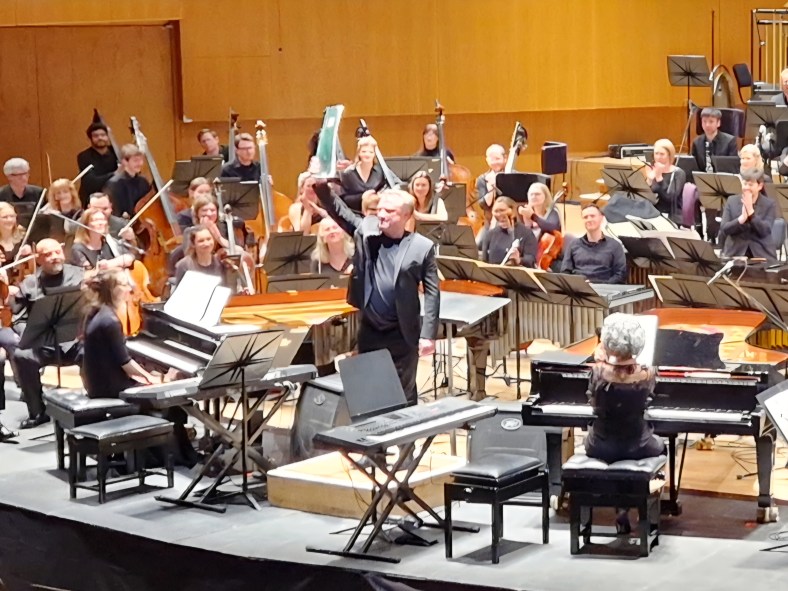
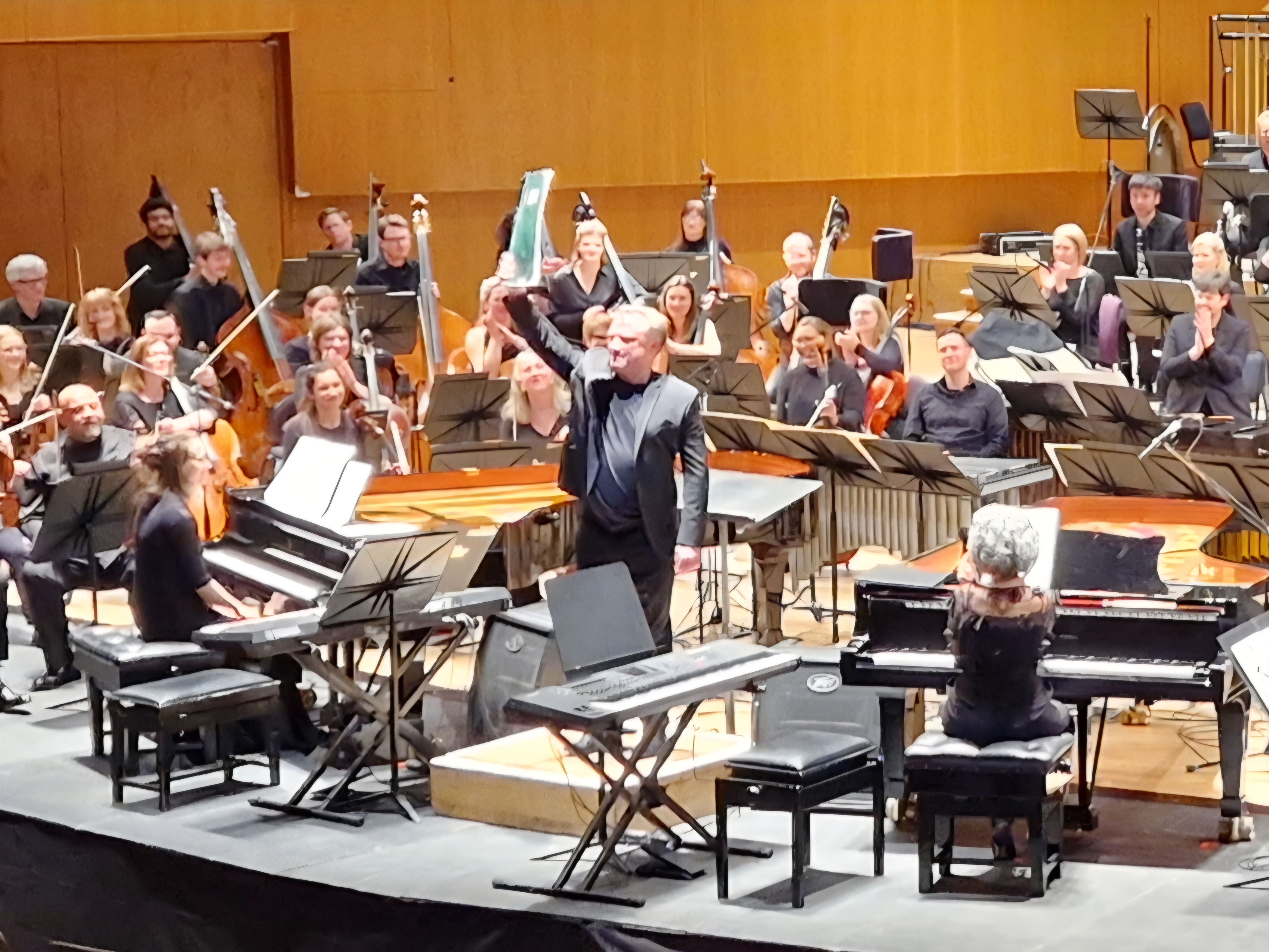
Colin Currie brandishing the score of Steve Reich’s The Four Sections

But which concerts stand out the most? Let’s get the bad out of the way first.

Most Disappointing Concert of the Year

There are a few candidates for this raspberry. Nicholas Collon is a conductor I admire enormously, and the Orchestre Philharmonique de Monte-Carlo is a fine orchestra, but their concert in April really didn’t work. On paper it was an excellent programme of Debussy, Poulenc and Bartok, but orchestra and conductor just didn’t gel. You could see it in the body language. Who knows why this sometimes happens, but it was a shame.

Still, that doesn’t take the crown. For that we have to look to the Proms. Perhaps it was my fault, perhaps I chose the wrong concerts, but of those that I went to only John Storgård’s semi-staged account of Shostakovich’s Lady Macbeth of Mtsensk District lived up to my expectations. The Arvo Pärt 90th birthday concert disappointed as well, though that may be simply that my expectations were too high, but the winner – insert sound of envelope being opened – was the Vienna Phil and Franz Welzer-Möst with Berg’s Lulu Suite and Bruckner 9. Beautifully played, of course, but oh so bland. Utterly unmemorable, but for the fact it was so disappointing.

Best Jazz of the Year

A new award this year, but it’s been a good twelve months for jazz. A couple of excellent evenings in London tacked on to visits to the Proms: Denys Baptiste led a McCoy Tyner tribute, and the Hungarian (but London-based) pianist Matyas Gayer was a discovery. Buxton may not seem an obvious jazz centre, but the Buxton Festival always has a jazz festival within, and Xhosa Cole playing Thelonius Monk was the highlight there.

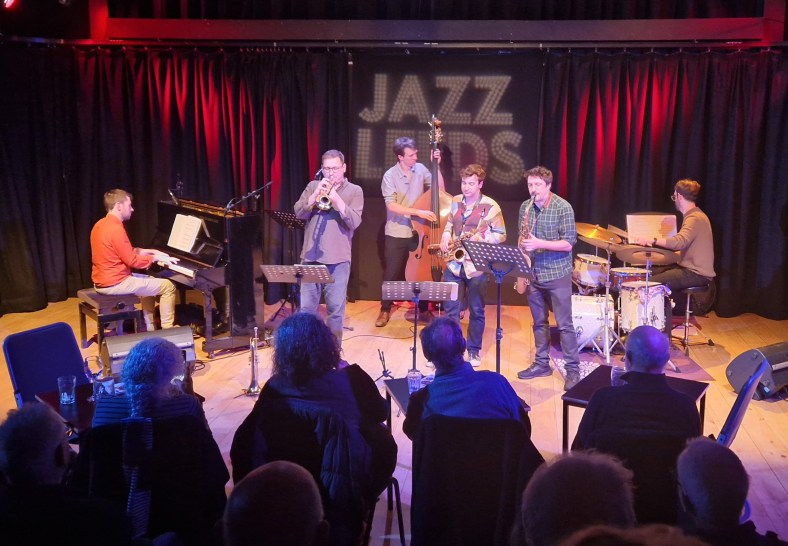
But best of all was in Leeds. I’ve always wanted to hear Misha Mullov-Abbado live, but in the past whenever he’s been playing near to where I live, events have conspired against me. This time I was not to be defeated. His latest album Effra is stunning; contemporary in feel and yet with clear links to tradition. Leading his sextet from the bass like a modern Mingus or Ray Brown, it was a wonderful evening. And yes, that name: Mullov-Abbado. Perhaps being the son of violinist Viktoria Mullova and conductor Claudio Abbado he was always destined for a life in music, but he really is supremely talented in his own right.

Misha Mullov-Abbado and friends

Most Surprisingly Enjoyable Concert of the Year

This may seem a strange category, after all, why go to a concert if you don’t expect to enjoy it?

But some concerts exceed expectations, and this was the case with the Orchestra of Opera North in May at Huddersfield Town Hall. Their Huddersfield concerts are always a pleasure and they often have big-name soloists. The town hall is quite small as an orchestral venue, with the balcony wrapping itself around the stage, and the result is often a sense of intimacy that compensates for the challenge the orchestra often has trying to fit everyone on stage.

What was unusual about the May concert was that it concentrated on the core members of the orchestra. Generally, to play full-scale concert repertory they have to bring in a large number of extras, but for this programme of Prokofiev, Schumann, Anna Thorvaldsdottir and Haydn they weren’t needed. There wasn’t a conductor, with the orchestra being led from the first desk by Katie Stillman, and even the Schumann Cello Concerto was played by the principal cello, Jessica Burroughs.

Perhaps this reduced scale was a consequence of financial expediency, but the result was a tremendous sense of family and camaraderie. The players really enjoying themselves, playing for each other and showing what they could do. Ten out of ten.

Concert of the Year

Drum roll please. Time for the big reveal.

In any other year it would have to be the Berlin Philharmonic with Simon Rattle playing John Adams’ Harmonielehre. A visit to the Philharmonie had long been on my wishlist, and when a window of opportunity opened up in October I might have gone regardless of the music, but that they were playing one of my favourite pieces was an incredible stroke of good fortune and Rattle has always been an excellent advocate for Adams. It was interesting to contrast this performance with that of John Wilson and his Sinfonia of London who gave a terrific account at the Proms in 2024. Simplistically, with John Wilson there was more of an emphasis on the music’s American twentieth century credentials, with the Berliners, and in particular the depth of sound from their strings, the nineteenth century roots were more obvious.

But no, wonderful though that was, the Berliners are only runners-up.

Sleep

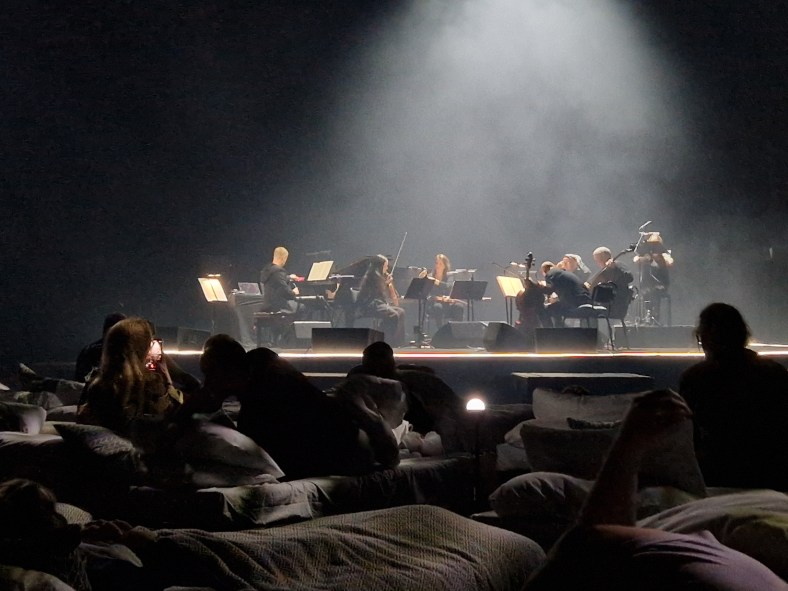
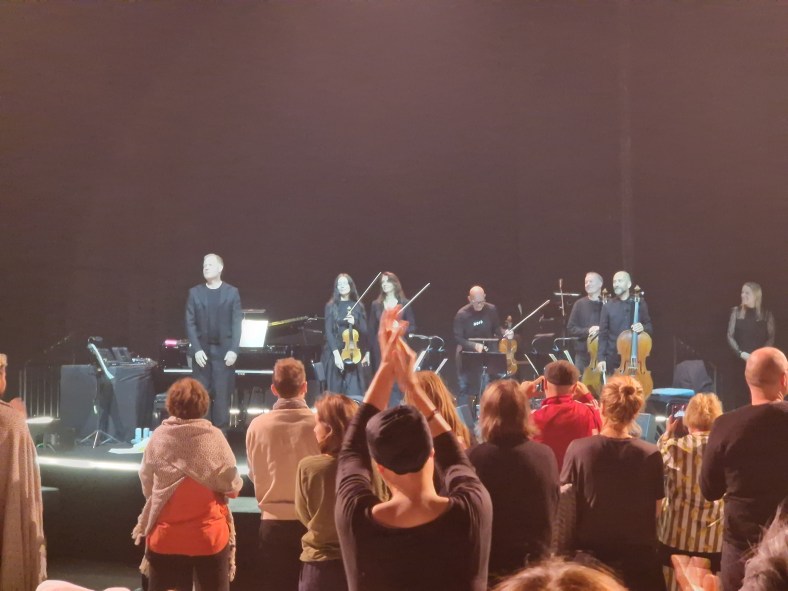
 I’ve written about it before so I won’t go on at length, but hearing Max Richter’s Sleep at Alexandra Palace at the beginning of September was something else. Memories that are still with me and will probably never leave. An experience unlike any other concert.

Can (Good) Music Be Political?

The Hallé Orchestra in Manchester has just finished a series of concerts with the American composer John Adams conducting his own music. I’ve loved his music since I first came across Shaker Loops back in the mid-1980s, to the extent that my girlfriend Isobel and I travelled all over the country if there was a chance of hearing something of his live, and his music was so little known in the UK back then that those performances were often UK premieres: Grand Pianola Music (1985) at the Almeida Festival, Harmonium (Birmingham, 1987),  Harmonielehre (Huddersfield, 1987), and Nixon in China in Edinburgh (1988). It was a special time for those of us in the know, a small group of admirers who were in on a secret. In short, I’m a fan.

So, I wasn’t going to miss these concerts and they didn’t disappoint. The performance of Harmonium on the first evening was particularly special, but it was the main item in the final concert, Scheherazade.2, that triggered a series of thoughts. It’s a magnificent piece of music; a 50 minute “dramatic symphony” (Adams’ words) for violin and orchestra, played with astonishing virtuosity and commitment by its original dedicatee, the Canadian-American Leila Josefowicz, but it acted as a seed around which a number of pre-existing worries crystallised. There is a clue in the title. While in no way (I think) intended as a criticism of Rimsky-Korsakov, Adams takes a very different approach to the character of Scheherazade and the piece reflects his views of how women are treated in the present-day, in particular – though not exclusively – in those (many) societies where women are repressed.

And all that is very laudable, not something I would dream of criticising, but did it in any way affect how I heard the music? If I hadn’t read the programme note or heard Adams’ pre-concert talk, would I have realised that was what the music was about? I very much doubt it. And will it change the position of women in Afghanistan? Of course not. Don’t get me wrong, I enjoyed it enormously simply as a large-scale symphony-concerto full of drama, emotion, and colour, but as social activism? Perhaps I’m being unfair on Adams. His view of a modern-day Scheherazade may simply have been a starting point, and the brilliance of Leila Josefowicz was another, leading to what first and foremost is a wonderful piece of music, but in the pre-concert talk he spoke approvingly of today’s composers for whom the non-musical themes of their work are of critical importance, citing as examples John Luther Adams and Gabriella Smith who write music focussed on environmental issues.

And that’s where I have my concerns. I can’t comment on Gabriella Smith as I am not familiar with her music (I shall have to explore it), but for me John Luther Adams comes nowhere close to his near namesake in the quality and interest of the music itself, and no matter how praiseworthy a composer’s extra-musical intentions may be, if the ideas behind the music become more important than the music itself, then something is wrong. Adams spoke about composers for whom content was more important than style, and while it’s great that current composers don’t feel constrained to write in any one style, the content must still be primarily musical content that is interesting and memorable.

But can classical music (for want of a better term) ever function as both an art and effective activism? I have my doubts. I struggle to think of many successful examples. Mozart? Perhaps Figaro a little – we forget today how radical Beaumarchais’ play was. Beethoven? Perhaps Fidelio. The finale of the ninth, possibly. But that’s all. Brahms, Schumann, Tchaikovsky, Rachmaninov? Hardly. In the twentieth-century what pieces are there that successfully tackle societal and political (in the broadest sense of that word) issues and which have lasted in the repertoire? Tippett’s A Child of Our Time, Schoenberg’s A Survivor from Warsaw, Britten’s War Requiem, Shostakovich’s Babi Yar, Reich’s Different Trains? Perhaps there are others, but I don’t think there are many, and what these examples all share is that they have texts. (Looking at that list of pieces again, I also realise that four of the five works are a response to the consequencies of antisemitism, but that’s another topic for another day.)

As a writer and music lover I have a foot in both camps. I share Mahler’s view that music takes us to places that words alone cannot, and yet there are times also when words are necessary and the two work in combination. But even then, good motives are not enough to produce a great piece of music that will resonate over the decades.

Sleep (Revisited)

Five years ago I wrote about Max Richter’s eight-hour piece Sleep. It was being broadcast on Radio 3 and I’d taken the opportunity to listen to it through the night (in the spare room for the sake of marital harmony). I never imagined back then that I would have the chance to experience Sleep live, but finally last month I did, when Richter gave two performances in London’s Alexandra Palace to celebrate Sleep’s tenth anniversary.

I didn’t hesitate. Well, not quite, once I’d got over the shock of the ticket prices that offended my Yorkshire sensibility, I didn’t hesitate, after all would I ever get the chance again? It is such a challenge for the performers that I wonder for how many more years Richter will want to do it. A month later and I am still processing the experience, quite unlike anything else I have ever been to. What strikes me, though, is that looking back on what I said five years ago I would say much the same thing now, though all my emotions were stronger for being at a live performance.

For a start there is the sheer magic of the music; the heart is captured from the first piano chords, while Grace Davidson’s soprano is a thing of wonderous beauty. The time flows so quickly. I didn’t sleep – though many did – but I never wanted to. I wanted to experience the piece in its entirety. Ideally, the perfect way to do so would be to get into that liminal stage between sleep and wakefulness. Perhaps I managed that for a few hours between 1am and 4am when I experienced something quite remarkable: I felt an overwhelming, almost relgious, sense of love. It was as if the music itself was holding me in an embrace where nothing bad could possibly happen.

For the final hour or so I wanted not only to be awake but to leave my bed and join others who were standing and sitting close to the performers. All live music is a communal experience that you share with others, but there is something special about sharing the music with strangers you have spent the night with! There is something again almost religious, a secular all-night vigil, the sense of a journey coming to an end. Max Richter spoke a few words before the performance concluding by saying simply “See you on the other side”, and that is how it felt. We had passed through the perils and dangers of the night together.

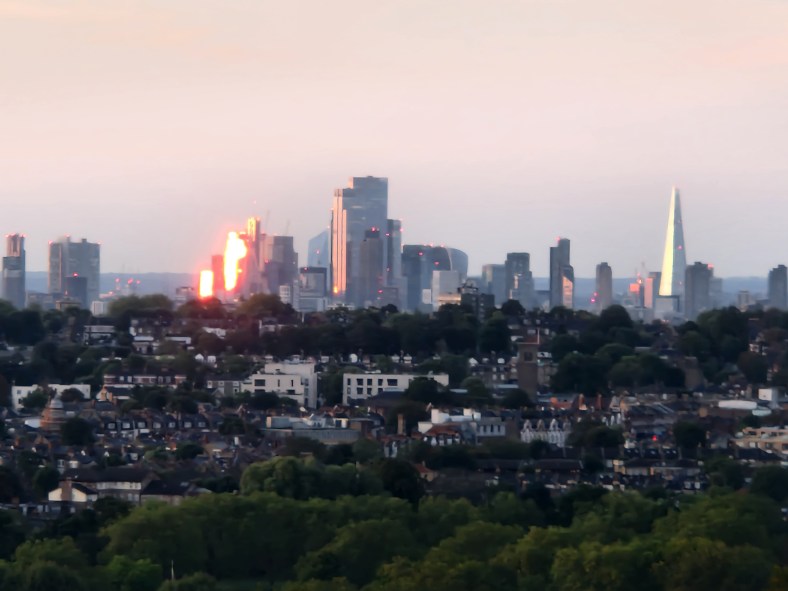
At 6am I walked out into the daylight and a beautiful late summer morning with the sun just starting to strike the City. For once, for one short period of time,all was incredibly well with the world.

Farewell to an era

There’s a line in Robert Altman’s movie “A Prairie Home Companion” where Virginia Madsen – playing the angel Asphodel dressed in a white trench-coat – comforts a bereaved woman by reminding her that the death of an old man is not a tragedy.

I had to remind myself of those words last week with the death of Harrison Birtwistle. He was 87 and after a rich and fulfilling life his death was not a tragedy, and yet it seemed one to me. I felt as if a huge figure in my life had gone. His music was amongst the first that I came to know when I started exploring the world of contemporary music back in the late 1970s early 80s: Verses for Ensembles, Punch & Judy, The Triumph of Time and perhaps above all The Mask of Orpheus (how I adore that opera and how I hated the 2019 ENO production). Others can express better than I can the combination of intellectual rigour coupled with a physicality, a visceral quality that was all his own and yet with a lyrical aspect that was all too often overlooked.

But perhaps what hits home the most is that his death in many ways feels like the end of an era. Norman Lebrecht referred to “the death of Britain’s last great composer”, and while I am sure he was as usual being deliberately provocative, and I hope that he is wrong, there is a glimmer of truth in this and it’s not just in the UK. Birtwistle was of the generation that gave us Boulez, Ligeti, Xenakis and Berio, all now gone. I love the likes of Glass, Reich, Adams and Pärt, but let’s face it, they’re no spring chickens. I hope that it’s not just my advancing years speaking when I say that I don’t find their counterparts among today’s composers, talented though they may be. There are plenty of people writing fluent, enjoyable music, but few with any strong sense of identity and with such a strong personal voice.

I worry. I worry that this is a reflection of today’s world where there seems to be a reaction against high art, where elite is a dirty concept and shallow ideas rule over depth and intellect. So, I worry, but in the meantime all I can do is to enjoy the legacy that Birtwistle left for us.

Sleep. Perchance to listen.

Sleep. Perchance to dream.

There are of course plenty of pieces of music where sleep is an unintended, unwanted consequence, and let’s be honest it’s happened to all of us at one time or another, but with Max Richter’s eight-hour Sleep it is the objective. Described as an eight-hour lullaby when it was premiered in 2015 at the Wellcome Collection library in London – as part of an exhibition devoted to the science of sleep I recall – the audience had beds and sleeping bags. The recording of that premiere was broadcast again on BBC Radio 3 the night of Saturday into Easter Sunday morning, in response to lockdown-anxiety, and broadcast in many other countries over the same weekend. I knew more or less what to expect from the one hour extracts available on the from Sleep disc but I had never heard the whole piece, so that night I decamped to the spare bedroom (for the sake of marital harmony) with a Bluetooth speaker.

It is possible to read about how Max Richter worked with neuroscientist David Eagleman, to learn about how the music references sleep patterns, about how the pitch spectrum was chosen to bring the listener into a womb-like state, but that all falls away in the face of the sheer sensual beauty of the music. The subtle interplay between the live musicians (piano and keyboards, five string players, and the ethereal soprano of Grace Davidson) and electronics was such that at times I wasn’t even sure which I was listening to, and the transitions as one section segued into the next…blissful.

I didn’t want to fall asleep, so gorgeous was the music I wanted to keep listening, but after an hour or two I inevitably did and the music worked its way into my dreams. I woke a couple of times during the night and when I did I felt a sense of extreme contentment, lying in bed bathed in this magical sound world and knowing that other people across the country were doing just the same.

Sleep. Perchance to listen.

On Bruckner, Writing, and Self-Confidence

I never expected there to be a connection between the music of Anton Bruckner and my writing, but somehow the two have come together in the last few days.

I hated Bruckner in my youth, but in my mid-years he has become more and more important to me. I might even go as far as to say that he is a composer I really couldn’t live without. But this isn’t going to be about his music, wonderful though it is, but about artistic self-confidence – something he famously lacked.

In addition to the canon of nine symphonies that I love, there are two others that until recently I hadn’t heard at all. Bizarrely, they are known as the Symphony No.00 and Symphony No.0. The “00” is a student work – though Bruckner was such a late-starter that in this case “student” means 39 years old, which is another story – it’s enjoyable and interesting for Bruckner lovers, but it’s the background to the “0” that struck a chord with me (pun intended).

It should really have been his second symphony, completed in its final form after his first, but he was so disheartened by a single negative comment from the conductor Otto Dessoff that he withdrew the symphony completely. Bruckner scratched out the “No.2” in the score replacing it with the German “annulirt”, cancelled. These days it’s known as the “Nullte” – the Zero.

Bruckner was so lacking in self-confidence, so doubtful of his own talent, that all it took was one negative comment. Just one comment, that was enough. But he never destroyed the score and the symphony was finally played in 1924. And it’s terrific music, not perhaps in the same league as his later mature symphonies but well worth playing and hearing.

So, what has this to do with my writing? Well, the day after failing to win a competition I had high hopes with, it’s a reminder that critics and judges are not always right, and that to have belief in your own writing is one of the most important things any writer (or artist) must have.

I don’t want any of my stories to be published decades after my death under the title “The Cancelled Stories”.

Anne-Sophie Mutter

Listening to Anne-Sophie Mutter play Penderecki’s second violin concerto – Metamorphosen – with the LPO at Bridgewater Hall last night caused me to reflect on issues of change and consistency.

Let’s deal with the change first: the shift in Penderecki’s music from the mid-1970s and in turn my own reaction to his later music. I loved Penderecki’s early pieces from works like Threnody, and De Natura Sonoris to the first Symphony, and the excitement of those thrilling scores. I couldn’t understand – felt betrayed almost – by his shift to a kind of hyper late romantic post-Shostakovich style, more or less from around the first violin concerto of 1976-1977. It just seemed dark and boring. But over the years, perhaps with greater familiarity, perhaps just my getting older and (hopefully) more mature, I’ve come to appreciate the depth of these pieces, and the wonderful handling of the orchestra, especially in Metamorphosen and particularly when played as well as it was by the LPO. If anything, it is now the earlier works that seem a little superficial.

More importantly though, what struck me most was Anne-Sophie herself. The brilliance of her playing was never going to be in doubt, that was a given. She followed the concerto with a Bach encore so exquisite that it had me not wanting to breathe lest I disturb her, and I can think of few musicians of her calibre who have been so committed to the cause of contemporary music, but it was the consistency of her approach to music that registered most strongly. I was a student when I first saw her play as a teenager, when Karajan brought the Berlin Phil to Oxford, and because she started so young I almost feel like she’s been around forever (when in fact she’s two years younger than me). There’s no shortage these days of brilliant young violinists, but that connection to Karajan links her to a different age. An age before the mediocrity of the present day; a time before the obsession with diversity and inclusivity, and the false god of cultural relativism. A world before talent shows designed for the curse of attention deficit, and before BBC arts and culture descended to the level of ‘journeys’ and soundbites.

With Anne-Sophie Mutter you know that what matters above all is the music and that everything else should be subservient to the art itself. A seriousness of purpose so often missing in the shallow waters of the quotidian inanities of life.

The Perfect Combination

What is it about the string quartet? Why is a form that is so intimately linked to the history of music, so tied to the greats of the past, still so popular with composers today? The symphony is now a rare beast, even the concerto is often written almost apologetically, and yet the string quartet – which for the general public may represent almost the quintessence of classical form – seems to go from strength to strength.

I’ve wondered about this before, but the question came back to me the other night after hearing a performance of Jörg Widmann’s Fourth Quartet (out of five), but also having seen that James Dillon’s Eighth had just been premiered, as had Rebecca Saunders’ “Unbreathed” to great acclaim. Nor do you have to look far to find other examples: the ten quartets of Peter Maxwell Davies, Wolfgang Rihm’s thirteen and counting (I’m writing this listening to his Third Quartet), and it doesn’t make much difference what particular style or aesthetic the composer comes from, Philip Glass and Brian Ferneyhough don’t have much in common except for fine string quartets.

Part of the answer must lie in practicalities, in cost and economy. A string quartet is more likely to be played than something written for a hundred-strong symphony orchestra; it’s more easily transportable, more easily fitted in to a regular concert programme (the Widmann I heard was sandwiched between Haydn and Tchaikovsky). Another reason surely is the commitment to new music by many quartets, especially younger quartets who have followed the example set by the indefatigable Ardittis (the Kronos having in my view taken the wrong path with their move into world music): Quatour Diotima, Minguet Quartett, and the Heath Quartet are just the first names to come to mind.

But there must be more to it than that. Perhaps it’s linked to another question: Why the string quartet and not the string trio? The trio is too simple and the difference that the second violin makes is remarkable, leading to the perfect combination and balance allowing for complexity and clarity, add a second viola or cello and the balance is lost again.

Unless of course your name is Mozart or Schubert.

Avoiding ossification

A first post in my new blog. Sometimes I will be talking about music, sometimes writing, sometimes…who knows? This one though is definitely music.

This year’s Huddersfield Contemporary Music Festival has just come to an end. The 39th Festival no less. I first went to HCMF back in the mid-1980s when it was run by Richard Steinitz. One year there was a memorable visit by John Cage, another time a young John Adams. The likes of Xenakis, Berio and Birtwistle featured prominently, and I remember showing Arne Nordheim the way to the Town Hall one night when he was lost. Composers who I think of as being absolute masters of the late twentieth century. Then in 1993 I moved abroad not to return until 2010 and when I started going back to Huddersfield I found that it had changed. Or at least so it seemed.

Instead of the Big Names of contemporary music, composers likely to be featured by the BBC at the Proms for example, there was more of an emphasis on the extreme fringes of the avant-garde. Composers I had never even heard of such as Rebecca Saunders and Georg Friedrich Haas. Music that often lived in the space where contemporary classical music (for want of a better term) met experimental jazz and improvisation. And I have to admit that at first I was disappointed: Where were the heroes of my youth? And then, even more alarmingly, I started to worry that as I was growing older my tastes were starting to ossify. Although my wife thinks that I listen to “strange music”, it seemed to me that too many of the concerts were too strange even for me.

So, realising that perhaps the fault lay with me and not the music, I went to a lunchtime concert featuring the Australian group Elision and composers I didn’t know, and where I was (almost literally – it was very loud) blown away by Aaron Cassidy’s The wreck of former boundaries for 2 trumpets with clarinet, saxophone, trombone, contrabass, lap-steel guitar and multi-channel electronics. A composer who I had never heard of writing music of visceral power, played with stunning virtuosity by the two solo trumpets. Highly dissonant, and yet the spirit of free jazz (Ornette Coleman an influence on the music) never seemed too far away.

In short it was wonderful (as was Rebecca Saunders’ Skin in another concert) and it reminded me of the importance of taking a chance on things, and keeping open ears and an open mind. No matter how old you are.