
When you have spent a night with Whitney Houston, it does tend to stay in the memory. An intimate gathering; just me, the Voice, Kevin Costner and three hundred other passengers on a flight to Hong Kong. Mainly it was just the lower-case voice as I couldn’t always see her over the bobbing heads of the rows in front of me, but that was often the problem in those days. It’s strange to think now that back then in-flight entertainment was a screen at the front of a section of seats, with everyone watching the same movie at the same time. No seat-back monitors with dozens of channels to choose from at will, most of them seemingly showing re-runs of Friends.
In truth I never liked Whitney, not my cup of tea, and I wouldn’t have been watching The Bodyguard had I been able to sleep, but apart from the fact that I never can sleep on planes in the best of circumstances, there was too much on my mind. The twelve-hour flight was the first chance I’d had in weeks to stop and think. The first opportunity to reflect on what I was doing since the day my life had pivoted to a new direction and I’d gone into the travel agents to buy a one-way ticket to Hong Kong. (Yes, you read that right; I bought my ticket in a shop – not with a few clicks on my laptop or taps on my phone. I am that old.) Since then, the weeks had been too busy to give any space for doubts to flourish. There were the inevitable farewell dinners with friends, drinks with colleagues. My house was to be rented out, so there was work to be done getting it ready. Deciding what I was taking, what could be given away or sold, and what should go into storage. After all, I was only going to be gone for two or three years – wasn’t I? I’d be back soon enough.
And why was I going anyway? The reason I gave to others was a need to move sideways before I could move up. A blockage in the natural career progression where I worked meant that a change was necessary. A dogleg as it were. But did it have to be six thousand miles away? Not unless you consider the real reason, which was to move on from failed relationships and to start afresh where I knew nobody and nobody knew me. Somewhere where I could create a new persona. Yes, I really was stupid enough to think that was possible, that by moving continents I could throw away my insecurities like a snake shedding its skin. Perhaps it was just as well that those weeks were so full-on. Even the final couple of days were hectic. But if I’d had time to think, I wonder if I would have chickened out? Perhaps the idea of leaving my family and friends would have frightened me into changing my mind? Probably not, after all I’d left my job, so that couldn’t be undone, and everyone else was telling me how exciting it sounded. But it didn’t seem that way in the middle of the night, when all I could think about was whether I had completely lost my marbles and what on earth was I doing moving to a city the other side of the world. So, I was glad to have Whitney and Kevin for company as we flew over Central Asia at 35,000 feet.
Seventeen years and forty-three days later and I’m on another one-way flight. This time with my wife beside me. The stewardess has already called her Sir twice, Cathay Pacific cabin crew never seemed to be able to get the hang of any other honorific regardless of the sex of the passenger, but any irritation is smoothed by the champagne and canapés. This time we have full-size seatback screens with more hours of stuff than anyone could possibly want, but of course The Bodyguard is not one of the films. Life has moved on, I have moved on, but any disappointment is quickly overcome by another glass of champagne.
Dinner is served on the best china and accompanied by fine wines. The seat reclines into a bed and I still have the PJs I was given. It wasn’t like this on the way out, and yet some things are the same: I still can’t sleep, and there is the same anxiety over whether we were doing the right thing. Hong Kong had become my home; it was where I was married and where my career blossomed. But, as with seventeen years before, the die had been cast, alea iacta est. Jobs had been left, and there are elderly parents in the UK to consider. Turning back was not an option, but for a period of time any reservations could, as before, be pushed to the back of my mind by the same rush to get ready; selling our cars, finding good homes for furniture that wasn’t coming back with us (chiefly by leaving things by the bins for people to take). The clearing out of a home. The drawing of a line. But whereas I’d come out with a suitcase, going back our life filled half a shipping container and we had a link so that we could track our possessions across the Indian Ocean, through the Suez Canal, Straits of Gibraltar and to the UK and our new home.
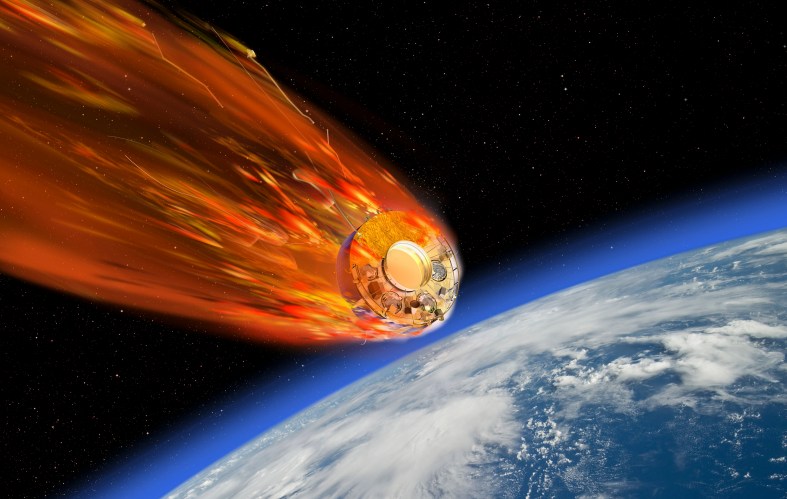
New home? Our new, old home might be a better way of putting it. They call it re-entry – the return of a long-term expat to their home country – and there’s always the danger of burning up in flames or crash-landing in the Kazakh desert. In seventeen years, the UK had become a place where nothing was as I remembered. I’d left when John Major was PM, and Cool Britannia had passed me by. I’d missed all of New Labour under Tony Blair, and four weeks after I returned Gordon Brown lost the 2010 election to David Cameron. Barring those weeks, I’d missed the entire Blair/Brown era. Nor were my old friends the same. I had gone to Hong Kong wanting to change, and in the end, I had, but the trouble then was that everyone I had left behind had also changed: elderly relatives had died, single friends were married, married friends were parents. Writing this now, it seems obvious, but it wasn’t at the time. It’s easy to imagine that your experiences of the world will be of interest to people, but it turns out they’re not, nor can you pick up where you left off. Instead, you’re seen as something slightly alien, something they can’t quite understand, and a sense of isolation quickly comes upon you. A stranger in your own home.
It’s sixteen years now since I returned to the UK, almost as long as I had been away, and in time I came to an acceptance of sorts when I realised that home was now a foreign country where things were done differently and shops closed early, and that it was necessary to start afresh, just as I had all those years ago after landing at Kai Tak. An expat again. We all change, only not with geography but with time. I should have known that, after all, I did The Go-Between at school. If the past is a foreign country, then so is the present when viewed through the lens of how things once were. The world moves on, of course, and friends move on, but the snag is that we had moved not in parallel but on divergent tracks. Our points of reference are not the same, our outlook on the world is different.
One day, perhaps, our paths may converge. Like raindrops running down a windowpane, at times they will move apart, but then sometimes their traces may come together again. When the point of divergence is far back, when we approach the undiscovered country from where there is no possibility of re-entry, perhaps then the differences will not seem so great. I hope so.


 Words and Music